|
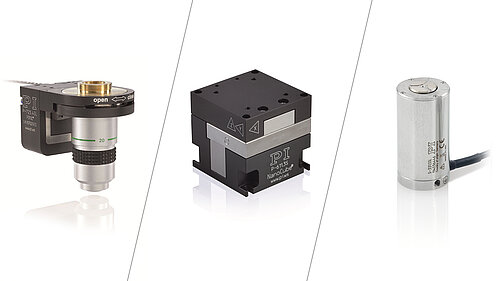
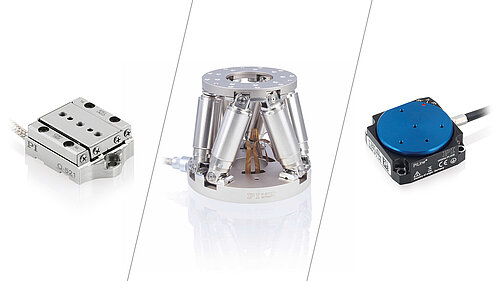
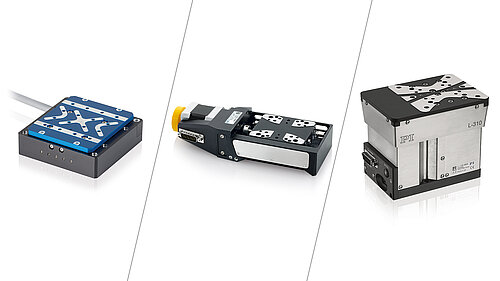
- Medical technology
- Optomechanics: rotating filters, etc.
- Consumer electronics
- Miniature mechatronics
- Micromanipulation
- Micropositioning
- Toys
|
|
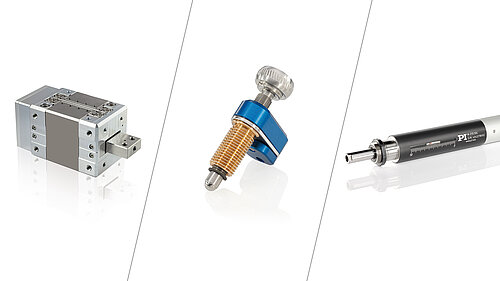
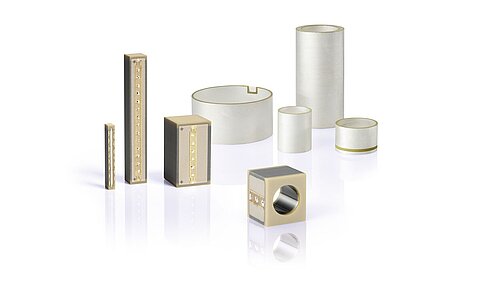
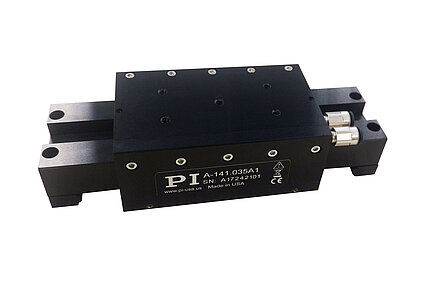
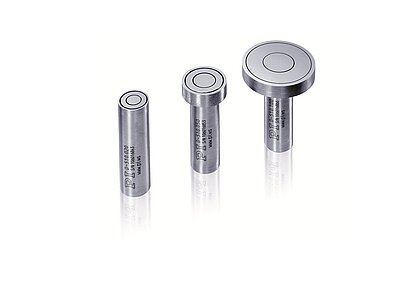
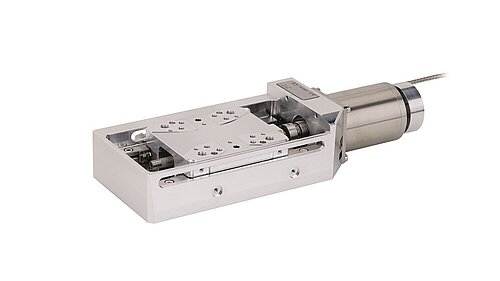
PILine® OEM piezo motor compact drives are designed for the integration into miniaturized micromechanical systems and replace within those systems drive elements such as motor / spindle systems. Thereby the principle of the ultrasonicmotor allows significantly higher velocities. The very compact design and high push/pull and holding forces relative to the size of the drive are additional, fundamental advantages of piezo motors over classic drives.
The mechanical integration of OEM piezo drives in a positioning application is simple because the moving slider for load coupling and the piezo ceramic actuator are delivered already assembled and mounted as a unit on a PCB driver board. The piezo motor is driven via a TTL signal at a supply voltage of only 5 to 12 VDC.
Different versions are available. They move light objects fast and precisely, such as glass fibers, optical,micro- or electromechanical elements.
Advantages of PILine® Compact Drives The OEM piezo drive features a novel, patented ultrasonic motor from PI. The extremely compact piezo motors reach velocities of up to 100 mm/s. The moving slider of the drive is preloaded against the ceramic actuator and thus creates a holding force at rest. The result is a very high position stability without the heat dissipation common with conventional linear motors. During operation, the oscillating piezo ceramic moves the slider along the length of the motor. There are no gears, leadscrews or other mechanical components to contribute play or backlash.
Simple Control The high-frequency oscillations of the PILine® motors are created by drive electronics that can in turn be controlled by short pulses. The output frequency of the drive electronics self-adjusts to the resonant frequency of the motor ceramic. Therefore, no individual tuning is necessary.
Patented Technology The products described in this document are in part protected by the following patents: German Patent No. 102004059429 International Patent No. WO2006/027031A1
|