|
- Surface Inspection
- Microscopy
- Laser technology
- Interferometry
- Metrology
|
|
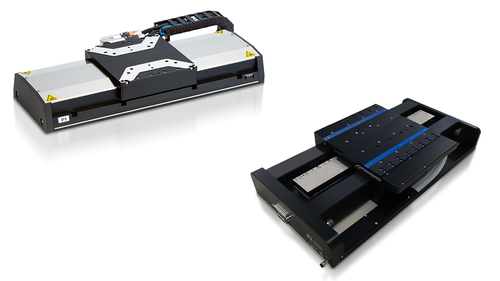
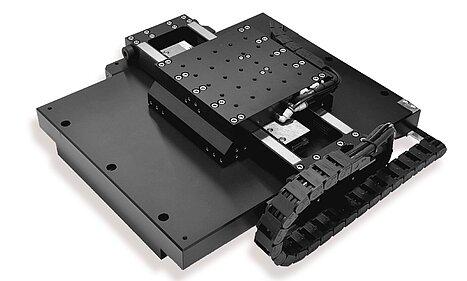
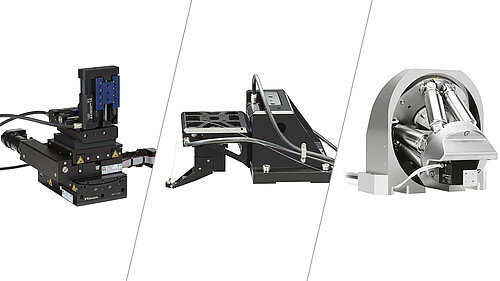
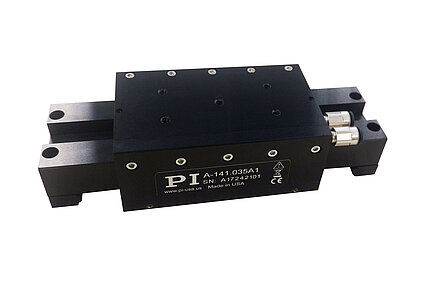
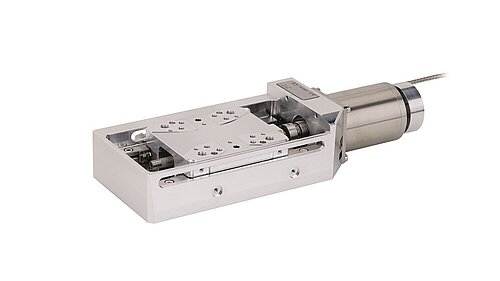
The C-702 digital hybrid motion controller has been designed for precision control of the M-511.HD (see link) and M-714 (see link) nanopositioning stages. Both are based upon the PI hybrid drive technology integrating piezoelectric and motorized drive components to form one motion and servo-control system. The result is a nanopositioning system for high loads that can follow a motion profile with nanometer position accuracy and high constancy of velocity over several millimeters of travel.
Highly Effective Servo-Control for a Complex Drive Technology The optimized interaction between the piezoelectric and motorized drive components to make them a single motion unit requires a high-speed sensor as well as powerful control algorithms. The digital, 2-channel, C-702 controller, based on modern CPU technology with a real time operating system, has been designed for this task. It is able to read the position signals with virtually no delay and process the data immediately. The integrated piezo amplifiers use a high-resolution 24-bit DAC to fully support the high position resolution of the piezo actuators. The new ultra-fast broadband SSI interface for the optical linear encoder supports stage velocities of 300 mm/s at a resolution of 2 nm. With special cabling, external sensor signals, like those from an interferometer, can be used for servo-control via an SSI interface. One Controller for One Motion System In PI hybrid systems, the motor-leadscrew and piezo actuator are fully integrated to form one motion system. The motor and piezo act together at all times. The result is far more than a coarse-adjust/fine-adjust system: effects like startup stick/slip and backlash can be completely compensated and a motion profile with high constancy of velocity can be followed. Because of the highpiezo stiffness, setting to a few nanometers only takes a few milliseconds, significantly faster than with conventional, higher-inertia, linear-motor-driven stages. Furthermore minimal increments in the range of the sensor resolution can be reliably executed. To allow high velocities beyond 100 mm/sec and nanometer-range incremental resolution, position information must be transmitted and processed very rapidly and a complex control algorithm is required.
|